
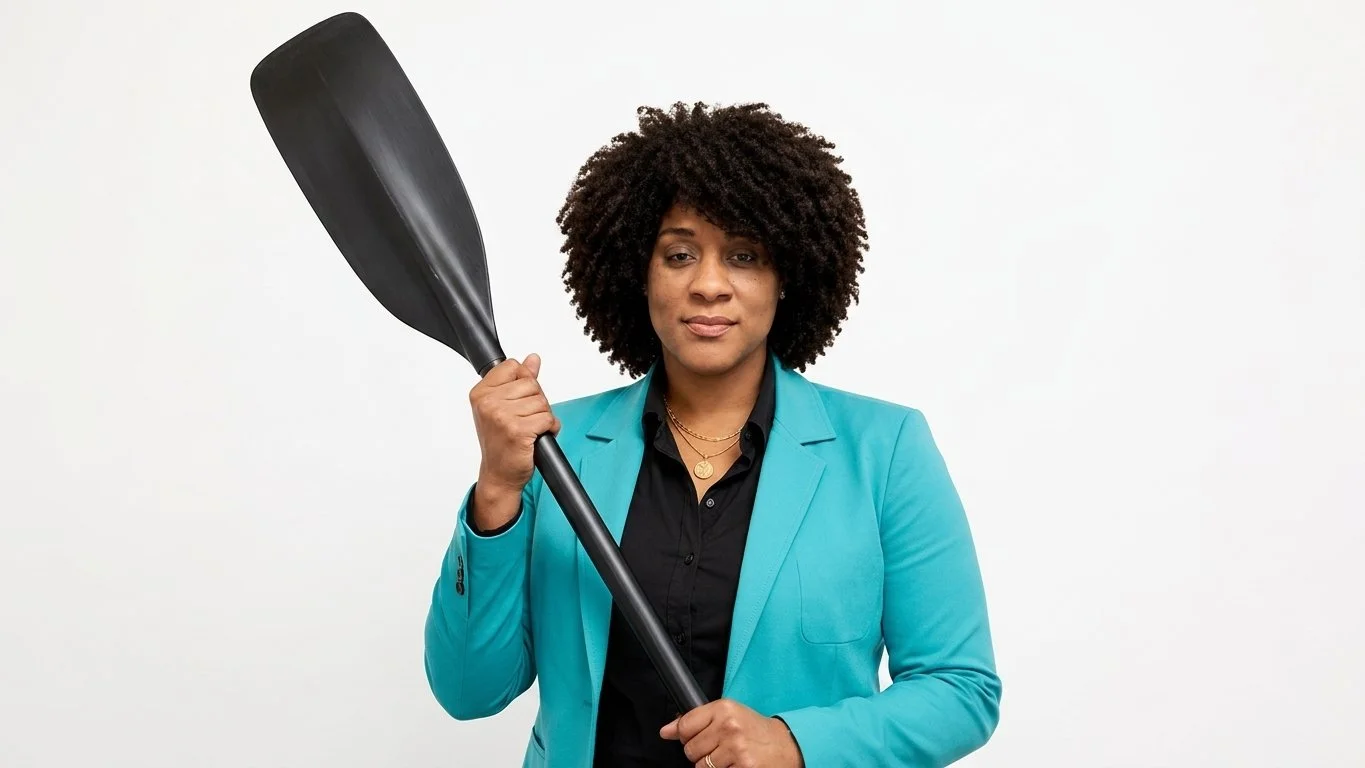
The woman behind the oar.
I'm Paola Altine — the kind of person who reads an ingredient list the way most people read a thriller.
A pharmaceutical biochemist by training. Herbalist by practice. Trichologist because the scalp is the conversation I keep coming back to. And currently pursuing a master's in Applied Clinical Nutrition because, apparently, three disciplines weren't enough.
But Zaviwon didn't begin in a textbook.
It began much earlier.
It began with my Haitian heritage.
The oils.
The plants.
The rituals.
The beauty practices passed down through my family for generations.
And then came the laboratory.
That's where I learned to ask a different kind of question:
Why?
Why this ingredient?
Why this concentration?
Why this texture?
Why this delivery system?
And most importantly:
Why does it work the way it does?
I never saw science and tradition as opposing ideas.
They were simply two ways of understanding.
Science is one language I speak.
Heritage is another.
Community is a third.
I move between a lab coat, a dance floor, and a sanctuary the way other people change shoes.
And with four languages — English, French, Spanish, and Haitian Creole — language itself became part of how I build.
Zaviwon isn't heritage translated into science.
It's heritage and science speaking to each other.
Ask me why I started, and I'll point at the gap: the ads that never show coily hair, the shelves that never serve it, the word "bad hair" that follows it across countries. Then I'll hand you a formula and tell you to read it yourself.
I don't do gatekeeping. I do delivery systems.